Tasir Al-Qurtubi (Classical Commentary of the Holy Quran) Volume-1
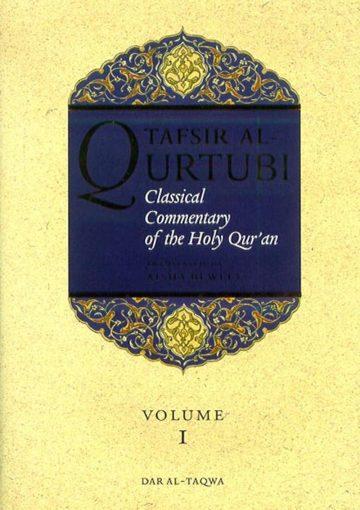
Tasir Al-Qurtubi (Classical Commentary of the Holy Quran) Volume-1
Author :
Editor :
Publisher :
Publication year :
2003
Number of volumes :
5
Publish number :
first
(0 Votes)

(0 Votes)
Tasir Al-Qurtubi (Classical Commentary of the Holy Quran) Volume-1
Classical Qur'anic commentary preserves centuries of engagement with revelation through language, law, theology, transmitted reports, and ethical reflection. The tafsir associated with al-Qurṭubī is especially notable for bringing legal analysis into sustained conversation with the Qur'anic text while also addressing linguistic and interpretive questions extending well beyond jurisprudence.
About the Book
Tasir Al-Qurtubi (Classical Commentary of the Holy Quran) Volume-1 presents the first volume of a classical tafsir associated with the Andalusian scholar Abū ʿAbd Allāh Muḥammad ibn Aḥmad al-Qurṭubī. His Qur'anic commentary became an influential work within the Sunni exegetical tradition.
Al-Qurṭubī's approach is particularly recognized for its detailed treatment of legal implications derived from Qur'anic verses. Where a passage concerns worship, family relations, transactions, social obligations, or other practical matters, the commentary can examine the jurisprudential questions connected with it.
The work, however, is not limited to law. Linguistic analysis, Arabic usage, variant interpretations, transmitted reports, theological questions, and moral instruction also contribute to its exegetical method.
This breadth reflects the interdisciplinary character of classical tafsir. Understanding a verse could require engagement with grammar, vocabulary, hadith, jurisprudence, earlier commentators, and the broader relationship between different Qur'anic passages.
As the first volume, the work begins the reader's sustained encounter with this methodology and establishes foundations developed throughout the larger commentary.
For modern readers, it also offers insight into how a major premodern Muslim scholar organized and evaluated different forms of interpretive evidence.
The book is therefore valuable both as a religious commentary and as a source for studying the history of Islamic scholarship.
What You Will Discover
- Al-Qurṭubī's approach to Qur'anic interpretation.
- Legal dimensions of Qur'anic verses.
- Linguistic analysis within classical tafsir.
- Use of transmitted reports and earlier interpretations.
- Connections between jurisprudence and exegesis.
- Features of premodern Islamic scholarly methodology.
Who Is This Book For?
This volume is suitable for advanced Qur'an students, researchers, seminary learners, Islamic law students, and readers interested in classical Sunni tafsir, jurisprudence, Arabic interpretation, and the history of Qur'anic scholarship.