
Reformation of Islamic Thought
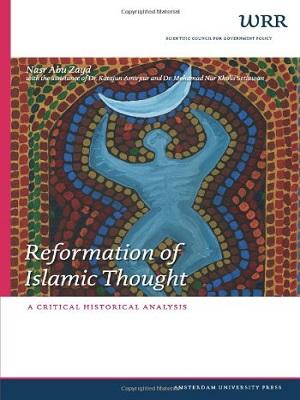
Reformation of Islamic Thought
Author :
Publisher :
Publication year :
2006
Publish location :
Amsterdam
(0 Votes)

(0 Votes)
Reformation of Islamic Thought
Modern Muslim intellectual history includes extensive debates about religious interpretation, cultural change, and the relationship between inherited traditions and contemporary life. Scholars across different societies have proposed new approaches to understanding Islam while responding to established religious institutions. This book examines those reformist efforts and evaluates their significance for contemporary Islamic thought.
About the Book
Reformation of Islamic Thought by Nasr Abu Zayd explores the writings and arguments of modern Muslim intellectuals seeking to reconsider traditional approaches to religious understanding.
The study examines thinkers from different parts of the Muslim world, including Egypt, Iran, and Indonesia.
This geographical range demonstrates that Islamic intellectual reform cannot be reduced to developments within a single country or cultural environment.
The thinkers discussed share an interest in moving beyond interpretations of Islam dominated exclusively by established legal and traditional frameworks.
Their approaches emphasize the relationship between religious understanding, historical circumstances, and individual faith.
Abu Zayd considers the possibility of interpreting Islam in ways that remain meaningful within changing cultural and social environments.
The study therefore raises questions about the authority of inherited interpretations and the intellectual responsibilities of contemporary believers.
An important theme is the distinction between religious revelation and the historical processes through which people interpret it.
This distinction has significant implications for discussions concerning theology, jurisprudence, and religious authority.
The author also examines whether reformist intellectuals have succeeded in generating meaningful renewal within Islamic thought.
Rather than assuming that every reform proposal represents progress, he evaluates the limitations and contradictions of different approaches.
Particular attention is given to the relationship between reformist arguments and Western representations of Islam.
The book questions whether certain reform movements have escaped established patterns of debate or remain constrained by reactions to traditionalist positions.
This critical perspective distinguishes the study from a simple celebration of religious modernization.
The work also highlights the diversity of Muslim intellectual responses to contemporary challenges.
Its contribution lies in treating Islamic reform as an ongoing intellectual debate rather than a single program with universally accepted objectives.
Readers encounter a comparative examination of how religious thinkers negotiate continuity, criticism, and change.
What You Will Discover
- Reformist Islamic thought across different Muslim societies.
- Critiques of exclusively traditional and legalistic interpretations.
- The relationship between religious understanding and cultural context.
- Debates concerning individual faith and religious authority.
- Abu Zayd's evaluation of reformist intellectual achievements.
- Questions surrounding Islamic renewal and modernity.
Who Is This Book For?
This book is suitable for researchers in contemporary Islamic thought, religious studies students, historians of ideas, and readers interested in reform movements. It is particularly useful for examining the intellectual challenges involved in interpreting Islamic traditions within modern societies.


