Islam the Religion of Dialogue
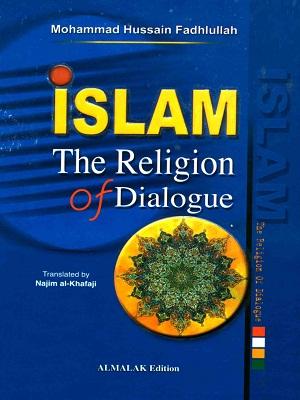
Islam the Religion of Dialogue
Author :
Interpreter :
Publisher :
Publication year :
2003
Publish number :
First
Publish location :
Beirut, Lebanon
(0 Votes)

(0 Votes)
Islam the Religion of Dialogue
Dialogue occupies an important place in religious understanding because it allows individuals to examine differences, exchange arguments, and pursue truth through discussion. This book explores dialogue as a fundamental feature of Islamic thought and considers its relationship with human nature, religious communication, and the practice of debate.
About the Book
Islam the Religion of Dialogue by Mohammad Hussain Fadhlullah examines the principles and purposes of dialogue from an Islamic perspective.
The English edition includes translations of the introductions to five Arabic editions of the work, allowing readers to encounter the author's reflections on the importance of dialogue.
One of the central examples concerns the Qur’anic account of God's announcement to the angels concerning the creation of humanity.
Fadhlullah draws attention to the exchange that follows, interpreting it as an illustration of how questions and responses form part of the process of understanding.
The book considers dialogue not simply as a method of communication but as a natural aspect of human intellectual life.
According to its description, human beings continually search for truth through questioning, discussion, and disagreement.
The author distinguishes between constructive dialogue and forms of argument that are inappropriate or unproductive.
This distinction is important because disagreement does not necessarily lead to greater understanding. The value of an exchange depends upon its purpose and the manner in which participants conduct it.
The work also addresses the relationship between dialogue and the defense of religious ideas.
Fadhlullah considers the ability to debate an important skill for individuals communicating and defending their convictions.
However, the ultimate purpose of dialogue, as presented in the book, is the pursuit and clarification of truth.
The study therefore connects religious communication with broader questions concerning human reasoning and the ethics of disagreement.
What You Will Discover
- The foundations of dialogue within Islamic thought.
- Qur’anic examples of questioning and discussion.
- The relationship between dialogue and human nature.
- Differences between constructive and unacceptable argument.
- The importance of debate in communicating religious ideas.
- The pursuit of truth as a central objective of dialogue.
Who Is This Book For?
This book is suitable for students of Islamic thought, religious educators, interfaith dialogue participants, and readers interested in communication ethics. It is particularly valuable for understanding Fadhlullah's approach to discussion and disagreement within an Islamic framework.